Red Light Masks vs Red Light Panels: Which Is Best for You (UK Guide, 2026)
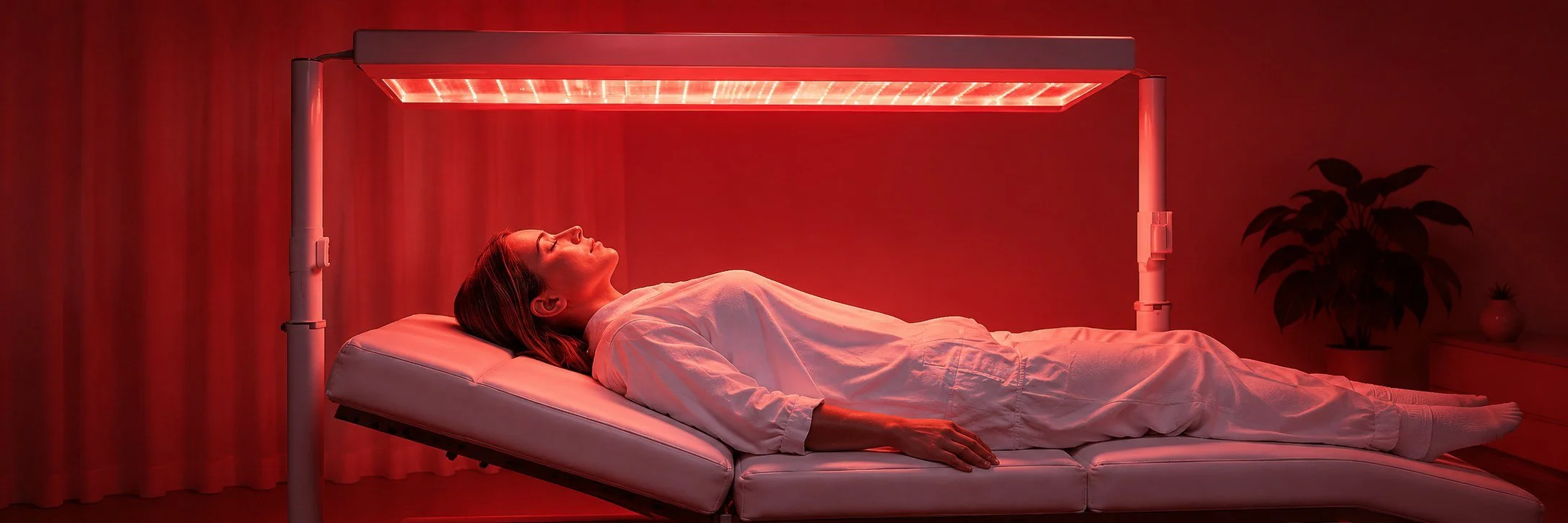
Editors’ verdict: panels consistently beat masks for deeper, longer-lasting results.
Best panel for quick sessions and wide coverage: Celler8® Half-body Panel (£1,395)
5% off with link. 3-year warranty. 30-day money-back guarantee. UK shipping. UKCA certified
Affiliate link. Discount applied at checkout. Prices may vary.
Updated May 2026
Are red light panels better than masks?
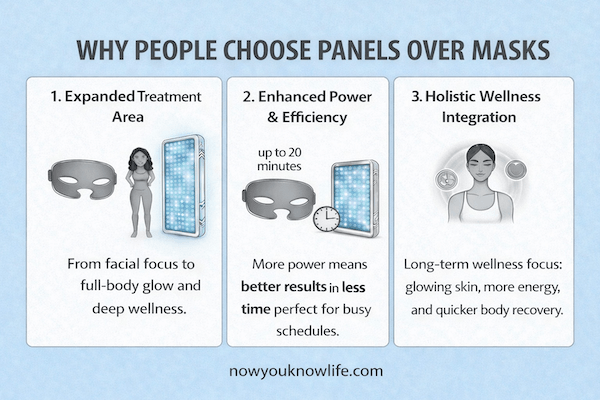
Red light panels are generally more effective than masks because they deliver higher output and cover a larger area in less time.
Masks are convenient for facial use, but panels are better suited for broader treatment and deeper tissue support.
What is the difference between red light masks and panels?
The main difference is coverage and intensity.
Masks sit directly on the face and are designed for targeted skin treatments, while panels emit light over a wider area at higher power, making them more suitable for full-body use, recovery, and overall performance support.
What is the Best Red Light Panel UK (2026)
The best red light panel UK (2026) is defined by a combination of output, wavelength range, and overall build quality rather than brand alone.
Higher-performing panels typically deliver stronger irradiance, multiple clinically relevant wavelengths, and wider coverage, allowing for more effective full-body use compared to lower-powered or more limited devices.
The Celler8® Half-body Panel is our top choice for both coverage and reduced session times.
LED masks vs panels: convenience vs effectiveness
Whilst they do offer a certain convenience when we look at the research it may be that this comes at the cost of effectiveness.
As always it does depend on your own personal use for the device and the level of results you expect to achieve.
We dive into the science behind red and near infrared light to tell a much richer story.
This article looks at how these specific wavelengths of light affect our biology, what the research today is showing and why red light panels consistently deliver deeper results than masks.
When most people start exploring red light therapy, they usually begin by searching for the best red light therapy mask.
It’s the device they see all over social media and the one that seems the easiest to use.
Masks look sleek. They’re wearable, plug-and-go, and they offer the promise of a calm daily ritual, just switch it on and let the glow do the work.
This ease and aesthetic has made masks the go-to entry point for red light at home, especially in the growing UK wellness space.
Editors’ clinic-grade panels we’d choose over a mask for full benefits (UK) →
Are red light masks beneficial?
Masks can absolutely help. Used consistently, they can bring a gentle brightness to the skin, soften minor roughness, and support surface-level clarity.
Clinical trials using low-powered LEDs have shown modest improvements in fine lines and tone.
For example, one study using 633nm red light found smoothing effects over time.
Another study combining red and blue light showed a positive impact on acne when used regularly.
These are real results, though they remain at the more cosmetic end of the spectrum.
But for those looking beyond surface glow-into areas like collagen support, circulation, inflammation, and long-term skin health-the story shifts.
That’s where the difference between a panel and a mask starts to matter.
How does red light therapy actually work?
Red and near-infrared light therapy work via photobiomodulation. That’s the process where light influences mitochondrial activity in the cells.
Mitochondria create ATP, which is the energy source every cell needs to function.
Specific wavelengths-particularly red and near-infrared-can stimulate an enzyme called cytochrome c oxidase, which helps drive this process.
This mechanism has been well documented in the literature, and forms the foundation for many of the physiological effects linked to light therapy.
Red light ranges from around 620 to 670nm, mostly affecting the skin’s surface layers.
Near-infrared goes deeper-between 810 and 880nm-reaching fibroblasts, capillaries, and lymphatic channels.
These are the structures responsible for collagen, circulation, and tissue repair. Panels are built to deliver enough energy to reach them. Masks, usually, are not.
Explore our full breakdown of the 7 wavelengths that matter most for healing to understand the precise role of red and near-infrared light in cellular recovery.
What's the difference between Red light therapy masks and Red light therapy panels?
Here’s the first major difference: output. Masks rest directly on the face, so their power levels need to stay low for safety. Most masks produce between 5–25 mW/cm².
By contrast, high-quality panels, whether in-clinic or at home can deliver 40 to 200 mW/cm².
That’s a meaningful jump in how much energy actually gets to your cells.
The second key difference is in wavelength range. Many masks only offer red light. Most good panels deliver both red and near-infrared.
Best red light therapy panels UK (2026)
If you’re looking of the best red light therapy panels in the UK for 2026, this is our top recommendation: Best overall - Celler8 Half-Body panel (5% discount auto-applied at checkout for our readers).
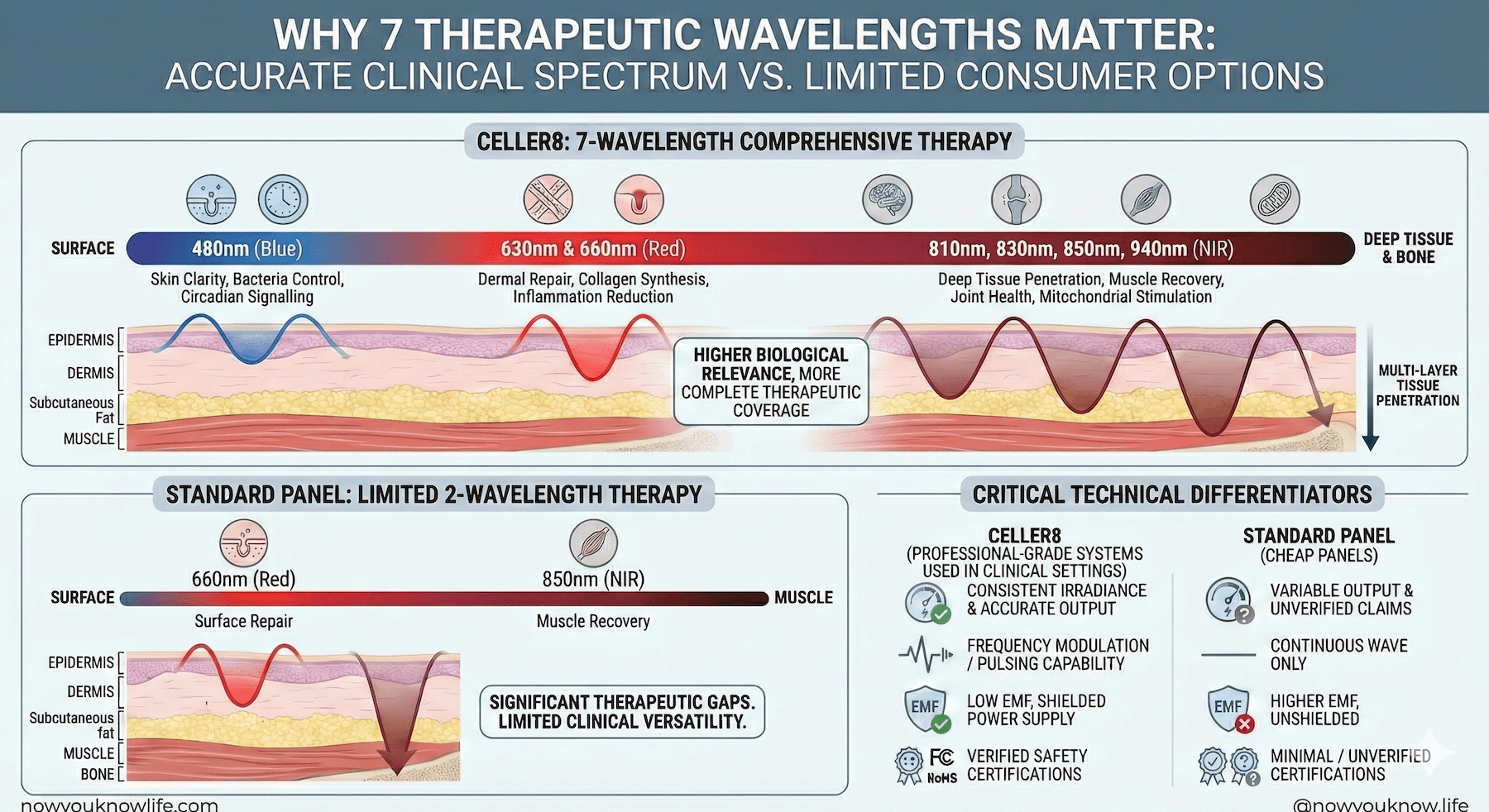
That dual blend matters. Studies on wound healing, muscle repair, and tissue recovery frequently use near-infrared wavelengths.
One trial also showed near-infrared’s role in collagen production, adding to the case for using panels if long-term results are your goal.
View prices, size options, and availability.
Dose is the real difference (intensity, distance, time)
The biggest reason red light therapy fails is underdosing.
Dose is the amount of light energy that actually reaches the tissue. It is determined by intensity, distance, and time, and dose is what drives the biological response.
If that dose is too low, mitochondrial signalling is not triggered and the therapy does nothing, regardless of how advanced the device appears.
Most consumer devices do not deliver enough usable light to trigger a mitochondrial response.
Clinical studies typically use around 20 to 60 mW per cm² at the tissue, yet many devices fall well below this once distance and power loss are considered.
For distance ranges and practical routines see our Distance guide.
Red Light Therapy and Cellular Energy
Red light therapy is often used for skin, recovery and mitochondrial support, but it is only one part of the wider cellular health picture.
For people looking beyond light exposure, our guide to NAD+ injections UK explains how injectable NAD+, liposomal NAD+ and NMN compare for cellular energy support.
Red light masks vs red light panels
There’s also lifestyle to think about. A mask requires you to lie down, eyes shut, and stay still.
You can’t drink your morning tea, scroll your phone, or talk during a session.
A panel, on the other hand, integrates into your life. You can sit at your desk, sip coffee, stretch, or read while it runs.
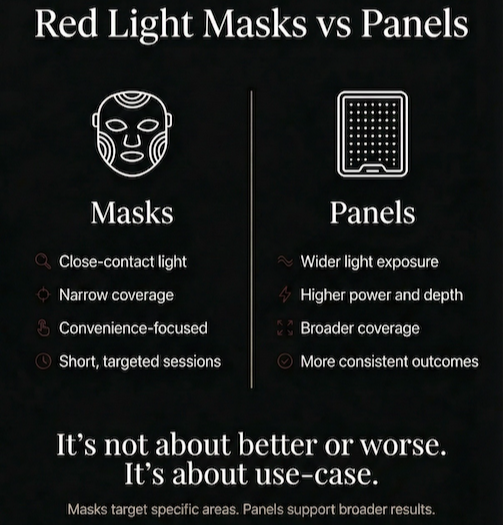
It's about use-case. [View the 2026 UK panel that delivers the best mix of power and coverag here]
Red light therapy mask vs red light panel: which is better?
Red light therapy panels are generally more effective than masks because they deliver higher total light output, deeper tissue penetration, and broader treatment coverage.
Masks can support surface-level skin benefits and convenience, but panels are better suited for consistent, clinically meaningful results.
This is especially true when targeting mitochondrial function, inflammation, and whole-body effects.
Choose by goal (not by device)
Photoageing and texture: masks can work if dose is adequate and used consistently
Acne and breakouts: panels usually win due to coverage and dose control
Pigmentation and melasma risk: panels allow safer distance and lower intensity control
Jawline and neck: panels cover awkward areas more evenly
Joints and recovery: panels are the practical option for depth and area
Sleep and mood: panels offer whole-body exposure and better adherence
Red Light Panels
Irradiance
Moderate to high output
Coverage
Face and full-body use
Depth
Reaches deeper tissue
Best for
Recovery, joints, inflammation, skin
Session style
Shorter sessions, wider coverage
Red Light Masks
Irradiance
Low to moderate output
Coverage
Face-only use
Depth
Primarily surface-level
Best for
Cosmetic skin support
Session style
Longer sessions, smaller area
How to choose the best red light panel in the UK
You can get the main benefits of red light therapy from a well specified desktop panel.
Localised exposure can still produce wider effects, which is why smaller panels are effective for recovery, sleep support, skin, and general wellbeing.
What changes with larger panels is not the type of benefit, but how quickly and conveniently you get results.
More coverage means shorter sessions and less need to move between areas, but it does not unlock different results.
When comparing panels, focus on how much usable light reaches your body at a normal distance, how much area the panel covers, and whether the brand is open about its measurements.
Which size red light panel should I choose?
For most people, a desktop panel is the most sensible starting point.
For more coverage and faster results you may want to upgrade to a half or full-body panel which would be our choice.
Safety and contraindications (a simple protocol)
Eyes and glare: never look directly into the light; use eye protection where appropriate
Migraines or headaches: start with shorter sessions and greater distance
Photosensitising medications: be cautious, as sensitivity to light may be increased
Melasma and PIH: avoid excessive intensity and heat; distance control matters
Darker skin tones: lower starting dose and reduced frequency are often better tolerated
Heat sensitivity: stop if discomfort occurs; warmth should remain mild
Safety note: start low, track your response, and adjust distance before increasing time or intensity.
So where does that leave us?
If you’re after a calming, cosmetic glow and enjoy the ritual, a mask may be enough.
If your goal is long-term cellular support, visible change, and maximum return on your time, what you actually need may be a panel, not a mask.
A panel built to clinical standards combines multiple therapeutically relevant wavelengths.
Ideally it should have(480 nm, 630 nm, 660 nm, 810 nm, 830 nm, 850 nm and 940 nm), flicker-free operation, low EMF output, and adjustable settings.
That’s what allows consistent, repeatable dosing rather than guesswork.
For targeted daily use, a desktop panel is often enough. Even localised exposure has been shown to trigger systemic effects throughout the body.
If you want full-body recovery and higher total output, a full-body panel offers broader coverage and greater intensity in fewer sessions.
Many people start with a mask because it feels like the simpler, lower-cost entry point.
Over time, though, they realise that limited coverage and lower total output make it harder to achieve the results they’re actually looking for.
That’s often when they end up adding a panel anyway. Starting with the right tool from the outset can save both time and money.
So which one should you choose?
Desktop panels: the best choice for most people starting out
Want targeted daily use with minimal setup
Care most about skin, joints, or specific areas
Prefer a smaller footprint and lower upfront cost
Larger panels: best if you want shorter sessions, not different results
Want systemic recovery and nervous system support
Train hard, deal with ongoing pain, or prioritise longevity
Prefer fewer, higher-dose sessions
Celler8 have launched a new mid-size panel that offers excellent value while still delivering all seven wavelengths at clinic-level power.
Their panel range is the one most closely aligned with our requirements for the UK market.
It hits the sweet spot for most people: significantly more power and coverage than desktop units, without the space or cost of a full-body setup.
If you’re still unsure if the investment is right for you: See our red light panel pre-purchase checklist
For most people seeking meaningful, long-term benefits, a panel is the better starting point.
It offers broader coverage, deeper tissue penetration, and far better value over time than a mask.
That’s why people who begin with cosmetic goals often end up upgrading to a panel once they want real, repeatable results.
Our top panel recommendation
If you want clinic-level light therapy at home with consistent, repeatable results, this is the panel we’d choose to invest in ourselves.
Manufactured in a UK facility registered with the FDA and CE-certified, this type of system is designed for people who take recovery, skin health, mood, energy, and performance seriously.
If you’re unsure which to choose, the desktop option is hard to get wrong for most people.
For full-body coverage and shorter sessions, the mid-size or full-size panels make more sense.
Verdict: panels consistently beat masks for deeper, longer-lasting results.
Affiliate link. Discount applied automatically at checkout. Prices & availability may vary.
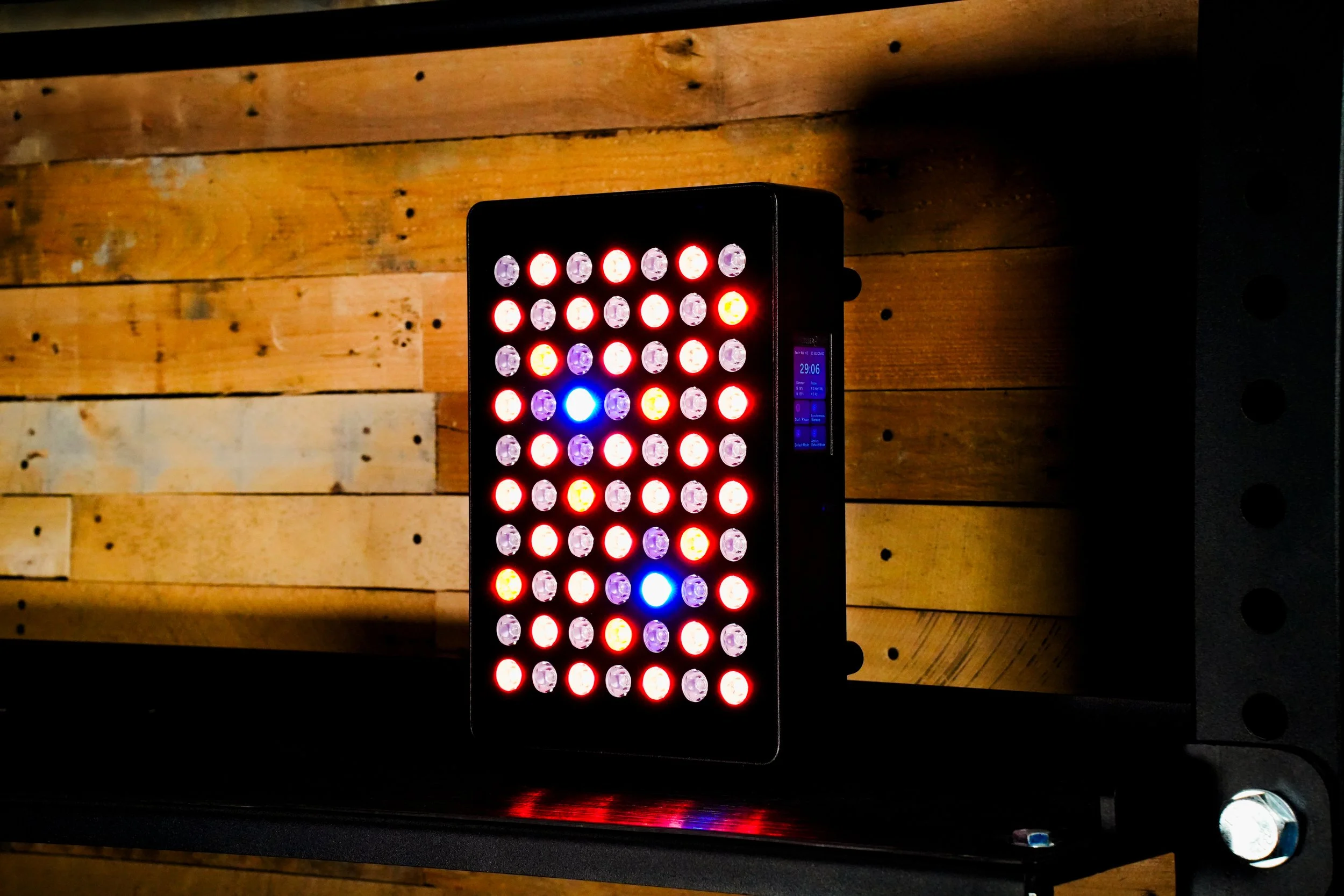
Clinical Power at Home
Desktop panel - £495
Mid size panel (new) - £1,395
Full-body panel - £3,995
Ships from the UK · Manufacturer warranty
5% discount applied at checkout
Desktop panel shown. Mid-size and full-body options available.
For a more advanced setup, pair your panel with a pulsed electromagnetic field (PEMF) mat to support deeper cellular recovery.
Explore our PEMF therapy guide (2026 UK) to understand how pulsed electromagnetic field therapy works.
View all red light therapy guides
Now You Know
© 2026 nowyouknowlife.com All rights reserved