Best Red Light Wavelengths UK: 660nm vs. 850nm (2026)

3 minute read - updated May 2026
By the end of this guide you’ll know which red and near infrared wavelengths deliver real results.
660nm vs. 850nm: The 2026 Red Light Verdict
The best wavelengths in 2026 are 660nm for surface-level skin health (collagen) and 850nm for deep tissue recovery and joint pain. Most users require a combination of both for optimal clinical results.
If you’re comparing devices, here’s our editors’ answer on panels vs masks →
Red light therapy: The 7 wavelengths that matter most
You’ve probably heard about red light therapy by now but not everyone realises just how powerful it can be for a range of issues, from skin to energy to mood.
At Now You Know, we’ve spent years researching and personally testing red light panels, face masks, and handheld devices to uncover what actually moves the needle.
There’s a huge range of options out there - and not all are created equal. What matters isn’t hype. It’s what actually works, backed by biology and aligned with your goals.
We call it bio-enhancement - a term we use for tech that supports your body’s own ability to heal, regenerate, and perform better at the cellular level.
This isn’t about chasing trends. It’s about building real results over time.
What wavelengths are used in red light therapy?
Red light therapy uses specific wavelengths of light, typically between 630nm and 940nm, to stimulate cellular function. Red wavelengths (630–660nm) target skin and surface tissue, while near-infrared wavelengths (810-940nm) penetrate deeper to support muscle recovery, joint health, and mitochondrial activity.
What are the 7 wavelengths used in red light therapy?
480nm – Skin + surface-level support
630nm – Collagen + skin health
660nm – Deeper skin penetration
810nm – Brain + mitochondrial support
830nm – Cellular repair
850nm – Muscle + joint recovery
940nm – Deep tissue + circulation
What is the best wavelength for red light therapy?
The best wavelength depends on your goal. Red light (630-660nm) is most effective for skin and collagen, while near-infrared (810-850nm) penetrates deeper and is better for muscle recovery, joint pain, and overall cellular repair.
How does this benefit me?
This guide is for beginners and experienced users alike.
We break down the key therapeutic wavelengths, how they work at a cellular level, and what benefits you can realistically expect.
We also explain how to assess wavelength quality and understand which specifications genuinely matter before choosing a device.
Why wavelengths matter
Photobiomodulation - or red light therapy - works because specific wavelengths of light penetrate the skin and trigger positive biological effects.
These wavelengths stimulate mitochondria, increase ATP production, release nitric oxide, and reduce oxidative stress. But not all wavelengths do the same thing.
There is a therapeutic window - typically between 600 and 1200 nanometres (nm) - where light has the greatest biological impact.
Within that range, each wavelength has a slightly different function and depth of penetration.
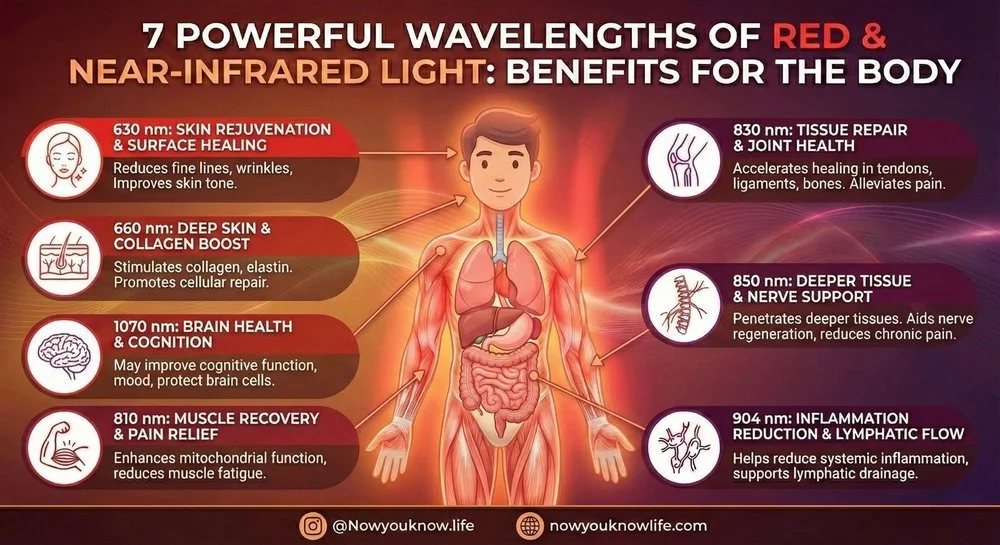
Comprehensive therapy vs. limited options. [See which 2026 UK panels offer this full clinical spectrum here]
Looking for the best red light therapy panels UK? See our 2026 guide.
The 7 key wavelengths that matter most
1. 480 nm - blue light (surface antimicrobial + circadian activation)
Targets the very surface of the skin
Clinically used for acne via antibacterial effects (C. acnes)
Helps regulate circadian rhythm via melanopsin receptors (morning use only)
Can improve alertness and cognitive activation early in the day
2. 630 nm - skin surface and anti-inflammation
Improves skin tone and texture
Reduces superficial inflammation
Boosts collagen production
Commonly used for acne, fine lines, and redness
3. 660 nm - deeper skin and hair growth
Penetrates deeper into the dermis
Stimulates fibroblast activity
Supports wound healing and hair follicle regeneration
Enhances skin plumpness and recovery
4. 810 nm - cognitive function and brain support
Crosses the skull to affect brain tissue
May support cognitive function, memory, and mood
Used in neurotherapeutic research
Improves oxygenation in the brain
5. 830 nm - muscle repair and recovery
Penetrates into muscle tissue
Reduces DOMS (Delayed Onset Muscle Soreness)
Speeds up recovery post-exercise
Promotes microcirculation and reduces inflammation
6. 850 nm - joint health and deep tissue
Supports joint mobility and connective tissue repair
Reaches cartilage and ligaments
Helps with chronic joint pain and stiffness
Often paired with 660 or 830 for synergy
7. 940 nm - deeper vascular and lymphatic benefits
Targets blood vessels and lymphatic flow
Reduces systemic inflammation
Enhances detoxification and circulation
Less visible but potent beneath the surface
What makes a great red light panel?
High irradiance (light intensity)
Adjustable settings - ability to control intensity and session duration
Flicker-free operation - to avoid neurological stress
Low EMF output - especially for longer sessions
Customisable wavelength modes - e.g. red-only mode at night
Why higher-quality red light panels cost more
At this stage, price is usually the last hesitation. Many panels appear similar at a glance, but meaningful differences only show up in use.
Output at real treatment distance, usable coverage, wavelength accuracy, and day-to-day reliability matter far more than headline specs, and those are often where compromises appear.
Paying more upfront is less about features and more about certainty: consistent performance, sensible session times, and equipment that continues to meet expectations over time.
Lower-cost panels rarely fail outright. They’re simply replaced.
Check Price, Specs + availability
When and how to use a red light panel
Morning: Use red + near-infrared to wake up cellular energy, reduce grogginess, and set circadian rhythm.
Pre/post workout: Use 660 + 830 + 850 nm to enhance muscle repair, reduce fatigue, and support performance.
Evening: Use red-only mode (630/660 nm) to support relaxation and avoid blue light that suppresses melatonin.
Stop guessing your dose. Most users sit at the wrong distance and lose 50% of the benefit - follow our 2026 Red Light Distance & Setup Guide to get the exact timing and safety protocols for your panel.
Even smaller red light devices can offer systemic benefits when used consistently.
Localised exposure on key areas - like the chest, spine, or legs can still positively influence overall health by stimulating circulation, mitochondrial function, and anti-inflammatory responses.
Unless you're a serious athlete or dealing with multiple problem areas, a compact or mid-sized device may provide excellent results without needing a full-length panel.
How this ties to mitochondrial health
Mitochondria are the energy engines of the cell. Light therapy works by stimulating cytochrome c oxidase - a key enzyme in the mitochondrial respiratory chain.
This leads to more ATP, less inflammation, and improved cellular resilience. Especially in aging or stressed tissue, this can significantly accelerate repair and recovery.
What to avoid when purchasing
Cheap panels that only use 660 + 850 nm with no customisation
High EMF or flickering lights
Misleading marketing - "FDA cleared" isn’t the same as FDA approved
Check Price, Specs + availability
Final thoughts
Red light therapy is one of the most promising tools in the wellness world - but only when done right.
Not all devices are equal, and not all claims are backed by science.
The 7 wavelengths above represent the gold standard - used correctly, they can support everything from mood to muscle repair to collagen regeneration.
More and more research confirms what the biohacking world has known for years.
Red and near-infrared light, when delivered at the right intensity and wavelength, can create a ripple effect throughout the body.
Light in the 630–850 nm range activates enzymes inside your cells that help produce ATP which is your body’s core energy source.
The result? Faster recovery, better repair, and improved overall function.
Photobiomodulation does not only act where the light is applied.
Additional research shows that near-infrared light delivered to one part of the body can trigger systemic biological effects.
This can influence distant tissues through blood-borne and mitochondrial signalling rather than direct illumination alone.
That’s why the quality of your panel matters. The best results come from the right wavelengths, intensity and dose - consistently delivered.
Some content may include affiliate links, through which we may earn a commission at no extra cost to you.
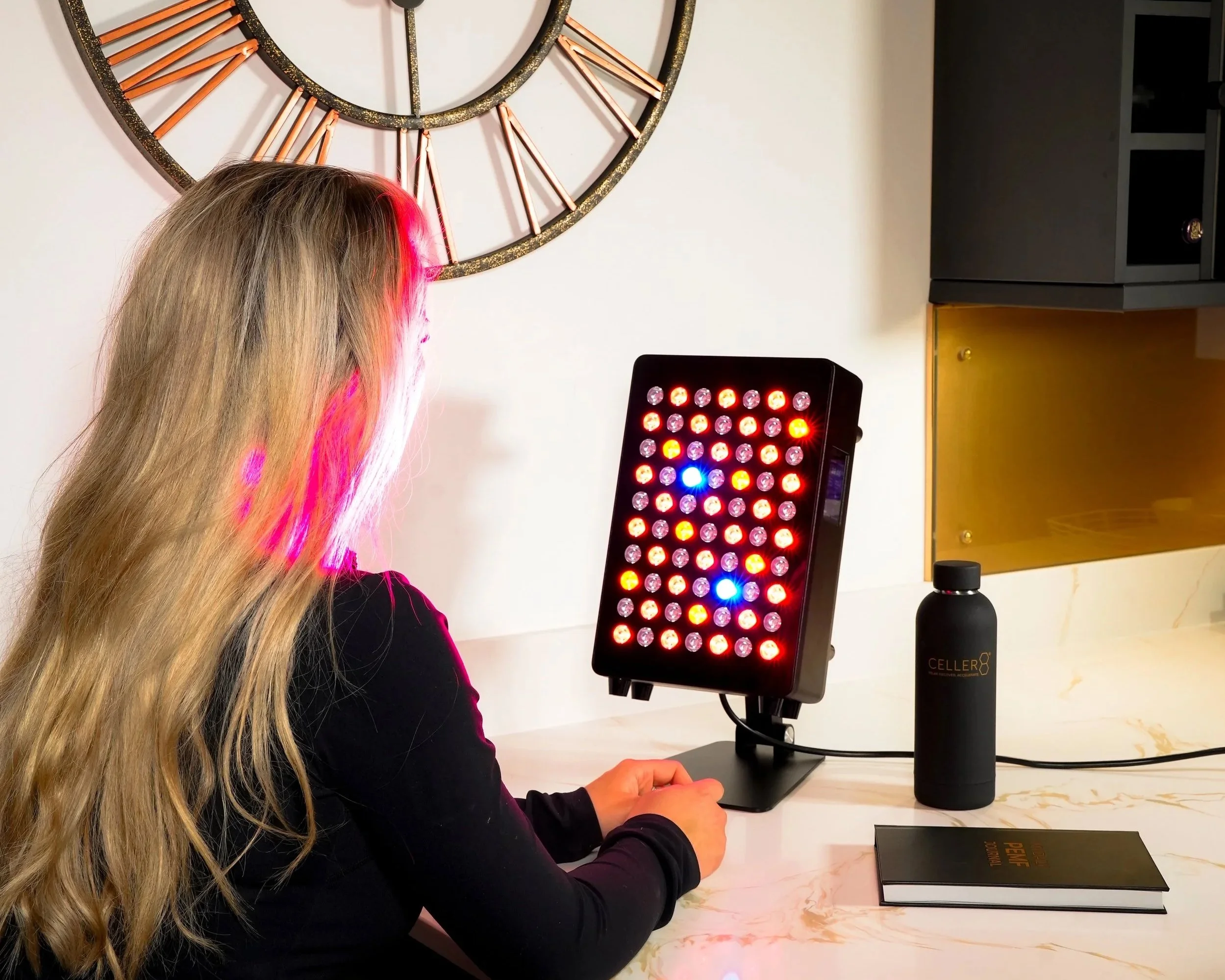
Clinic-Grade Red Light Therapy
Desktop panel - £495
Mid-size panel - £1,395 (best for most people)
Full-body panel - £3,995 (maximum power/coverage)
Ships from the UK · Manufacturer warranty
5% discount applied at checkout ↓
Affiliate link. Discount applied automatically at checkout. Prices & availability may vary.
Once wavelength is understood, the real decision isn’t technical anymore - it’s practical: mask or full panel, based on coverage, budget, and how consistently you’ll use it.
View all red light therapy guides
Now You Know
© 2026 nowyouknowlife.com All rights reserved