Why Red Light Therapy Works for Some People and Does Nothing for Others
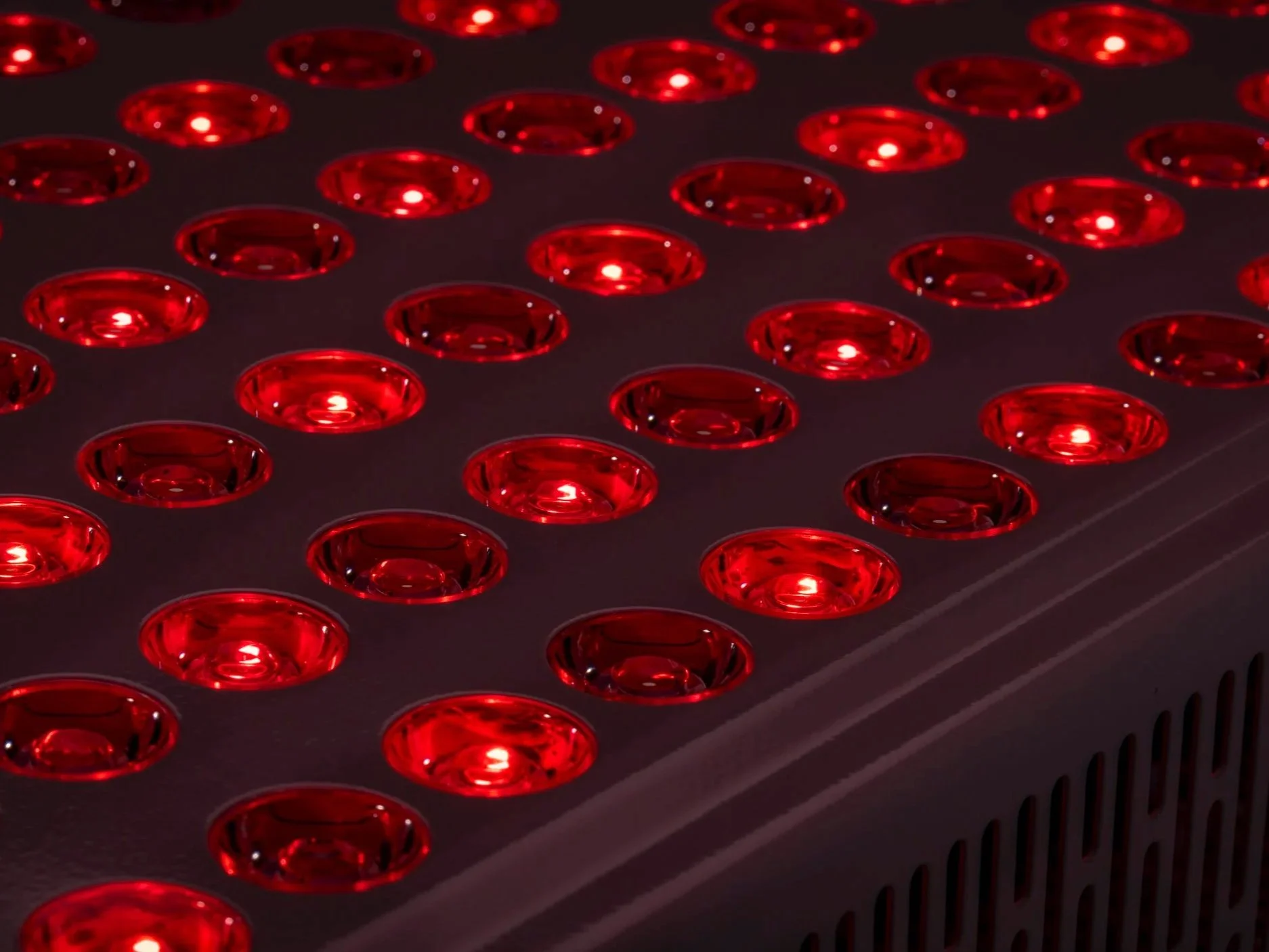
After reading this edit you will know why the same red light device works for some people and not others, and what is really happening inside your cells.
Red light therapy has one of the strangest reputations in modern wellness.
For some people it feels life changing. Better skin. Less pain. Faster recovery. More energy. Better sleep.
For others it feels like nothing at all. No warmth. No visible change. No noticeable benefit. Just another device in the corner of the room.
That split is not because red light “sometimes works” and “sometimes does not.”
It is because most people are unknowingly using it in a way that biology cannot respond to.
Once you understand how light interacts with human cells, the mystery disappears.
The real mechanism behind red light
Red and near infrared light do not work like heat lamps, saunas, or UV tanning beds. They do not burn, stimulate, or shock the body into doing something.
They work by feeding energy into the mitochondria.
Inside almost every cell in your body is a structure called the mitochondrion. Its job is to convert oxygen and nutrients into ATP, the energy currency of life.
Everything from healing to muscle contraction to brain function depends on how well those mitochondria perform.
Red and near infrared light are absorbed by a mitochondrial enzyme called cytochrome c oxidase.
When photons at the right wavelength hit this enzyme, they increase its activity. That allows the mitochondria to produce more ATP.
This is not theory. It is one of the most studied mechanisms in photobiomodulation.
More ATP means more cellular energy for repair, inflammation control, circulation, collagen production, and nerve signalling.
That is why red light can improve so many seemingly unrelated things.
But that mechanism only works if enough photons actually reach those mitochondria.
That is where most people go wrong.
See why panels beat masks + our editors’ chosen panels →
Dose matters more than brand
The biggest reason red light fails is underdosing.
Most consumer devices do not deliver enough light intensity to trigger meaningful mitochondrial change.
A few minutes in front of a weak panel is biologically irrelevant.
Photobiomodulation follows what scientists call a biphasic dose response. Too little light does nothing. Too much can actually inhibit function. There is a sweet spot.
Most clinical studies use irradiance in the range of 20 to 60 mW/cm² at the tissue, sometimes higher depending on depth.
Many popular consumer devices deliver only a fraction of that by the time the light reaches the skin.
If you stand too far away, use a low powered device, or only do short sessions, your mitochondria never receive enough energy to respond.
So one person uses a powerful, well calibrated panel at the right distance for ten minutes and sees results. Another uses a decorative red lamp for two minutes and feels nothing.
Your tissue changes how light penetrates
Skin tone, fat thickness, hydration, inflammation, and circulation all affect how deeply light penetrates.
Near infrared wavelengths around 810 to 880 nm travel much deeper into the body than visible red light.
That is why people with joint pain, muscle injuries, or deep inflammation often respond better to devices that include near infrared.
This difference in wavelength depth is shown clearly here.
If you only use red light on a deep tissue problem, the photons may never reach the cells that need them.
This is one of the quiet reasons why some people swear by red light and others give up.
They are aiming the right tool at the wrong target.
Your mitochondria might already be broken
This is the part almost no one talks about.
Red light does not create healthy mitochondria. It stimulates the ones you already have.
If your mitochondria are damaged by chronic stress, poor sleep, inflammation, toxins, or metabolic disease, they may not respond strongly to light at all.
In those cases, red light can feel subtle or even useless at first.
There is research showing mitochondrial dysfunction in chronic fatigue, fibromyalgia, neurodegeneration, and metabolic syndrome:
For these people, red light can still help. But it often needs to be combined with sleep, nutrition, and sometimes other mitochondrial support before it feels dramatic.
This is why athletes and healthy people often feel red light immediately, while people with long term illness need patience.
Timing changes the effect
Mitochondria follow circadian rhythms. They are more responsive to light at certain times of day.
Morning exposure tends to support energy and metabolism. Evening exposure can shift sleep and recovery.
Late night exposure can sometimes disrupt melatonin if the device emits visible light.
So two people using the same device at different times of day can experience very different outcomes.
One feels energised. The other feels wired. The third feels nothing.
Again, not random. Just biology.
Expectation changes perception
This part matters more than most people realise.
The brain filters sensation based on expectation. If someone expects a big, dramatic feeling from red light, they often miss the slow, quiet changes it actually creates. Less pain. Slightly better sleep. Faster recovery. Clearer skin over weeks.
These are real effects. But they are not fireworks.
Studies on placebo and perception show how expectation shapes what we notice.
This is why people who use red light for performance or skin tend to see results sooner than people waiting for a miracle cure.
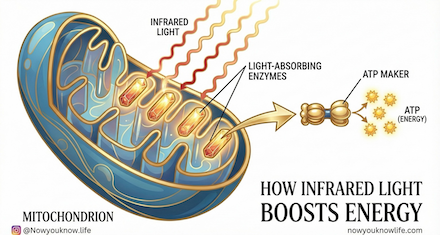
The Cellular Battery: Infrared light stimulates mitochondria to produce ATP energy, the key to faster recovery. See how this science translates into results in our guide to the best red light therapy panels in the UK for 2026.
Why PEMF and red light often get confused
Many people lump red light and PEMF into the same category of “energy devices”. They are not the same.
Red light works through photons and mitochondria. PEMF works through electromagnetic fields and ion movement across cell membranes.
They affect different parts of the cell but often lead to the same outcomes: less inflammation, better circulation, faster healing.
This is why some people respond better to one than the other. Their bottleneck is different.
Understanding that is part of becoming truly bio literate.
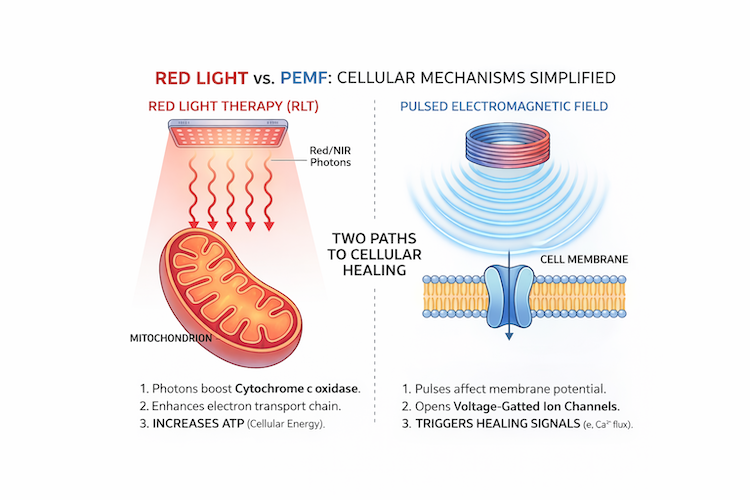
Energy vs. Voltage: This diagram shows why Red Light fuels the mitochondria (ATP) while PEMF "recharges" the cell membrane. If you’re deciding which technology to invest in first, start with our vetted guide to the best red light therapy panels in the UK for 2026.
The conclusion
Red light therapy does not randomly work.
It works when enough photons at the right wavelength reach responsive mitochondria at the right time in a body that is capable of using the signal.
When any one of those pieces is missing, the experience changes.
This is why real users report everything from life changing benefits to complete indifference.
Once you understand the biology, the stories all line up. That is what separates marketing from mastery.
If you’re deciding if a mask or panel is better and want a clear, evidence-led way to choose before buying - See why panels beat masks + our editors’ chosen panels →
View all red light therapy guides
Now You Know
© 2025 nowyouknowlife.com. All rights reserved